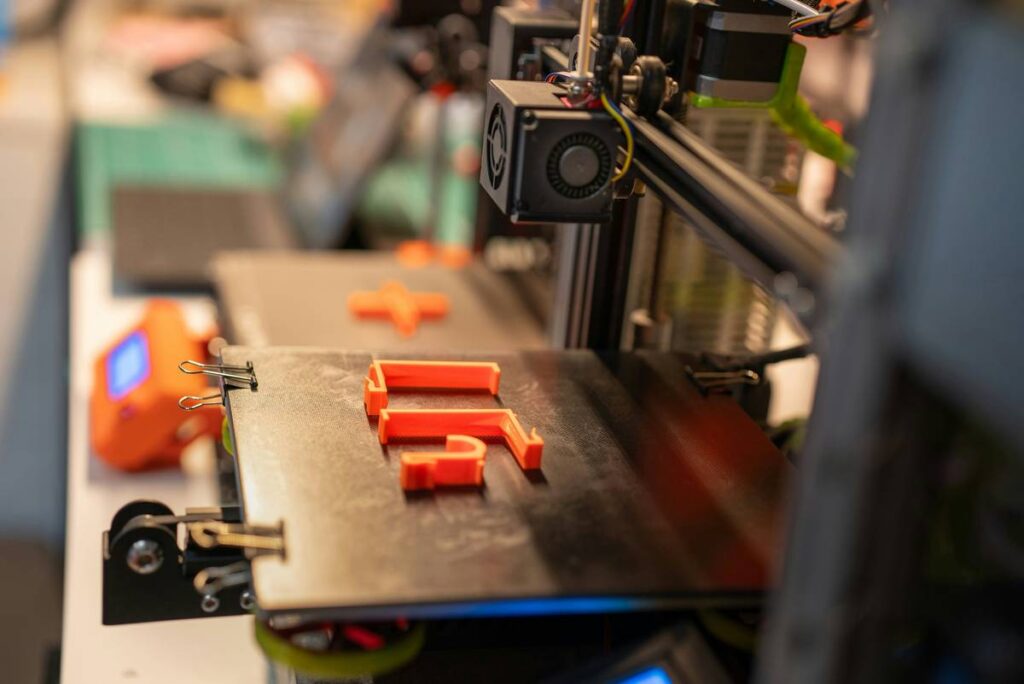
Most product developers still treat 3D printing like a novelty—something flashy for trade shows, not real engineering. That mindset burns cash, kills timelines, and leaves teams stuck iterating physical prototypes months behind schedule. The solution? Treat additive manufacturing as your core development engine—not an afterthought. And yes, that starts with embracing the full potential of product development printing advancement of 3d.
Why Traditional Prototyping Fails in Modern Product Development
Machined or molded prototypes take weeks. Sometimes months. You’re locked into expensive tooling before you even know if the form factor works. And by the time you get hands on it, market needs have shifted.
Worse—you’re forced to simplify geometry to meet manufacturing constraints. Real innovation lives in complex curves, internal lattices, and organic shapes. Traditional methods flatten that out. They reward conformity, not creativity.
But here’s the irony: many teams adopting 3D printing still use it wrong. They print one-off mockups using brittle desktop PLA, call it “rapid prototyping,” and wonder why their field tests fail.
Product Development Printing Advancement of 3D: A Practitioner’s Workflow
Forget hobby-grade printers. Real product development demands engineering-grade materials, precision tolerances, and iterative validation loops built directly into your CAD-to-factory pipeline.
Select the Right Process for Your Stage
Early concept? Use resin-based SLA for smooth surfaces and fine detail. Functional testing? Switch to SLS nylon or MJF for isotropic strength. End-use parts? Consider metal binder jetting or DMLS if thermal or load specs demand it.
Material Choice Isn’t Just About Strength
You need UV stability if it sits outdoors. Chemical resistance for medical or automotive. Flame retardancy for consumer electronics. Don’t default to “tough resin”—audit your use case first.
Embed Validation Early
Print test coupons alongside your prototype. Measure shrinkage, warpage, and dimensional accuracy against your CAD model. Log it. Adjust orientation, supports, and infill based on real data—not gut feel.
| Prototyping Stage | Recommended 3D Tech | Avg. Cost per Part (USD) | Lead Time | Key Material Options |
|---|---|---|---|---|
| Concept / Form Study | SLA / LCD Resin | $25–$75 | 1–2 days | Standard, Draft, Castable Resins |
| Functional Testing | SLS / MJF | $80–$250 | 3–5 days | Nylon 12, Glass-Filled PA, TPU |
| Pre-Production Validation | Industrial FDM / Metal AM | $200–$1,200+ | 5–10 days | ULTEM, PEEK, Stainless Steel 316L |
The Industry Secret: Your Printer Is Only 20% of the Equation
Top-tier firms don’t win because they own Stratasys Fortus machines. They win because they’ve built feedback loops between design, simulation, and printing. Here’s how: they run thermal and stress simulations in CAD, then print only high-risk zones for physical validation—not the whole assembly. That cuts material waste by 60% and accelerates learning.
And they never trust layer adhesion blindly. Ever seen a drone arm snap mid-flight because Z-axis strength was assumed equal to X-Y? Yeah. Real pros do destructive pull-tests on printed coupons monthly—calibrated to their specific machine, material batch, and ambient humidity.
The math is simple: if your iteration cycle is measured in weeks, you’re already losing to competitors running daily print-test-refine loops.
Frequently Asked Questions
How does 3D printing reduce product development costs?
By eliminating upfront tooling and enabling same-day design changes. You validate function before committing to injection molds—saving tens of thousands per revision.
Can 3D-printed prototypes withstand real-world testing?
Yes—if you choose engineering thermoplastics like Nylon 12 or ULTEM. Desktop PLA won’t cut it, but industrial SLS or FDM parts routinely pass automotive and medical durability standards.
What’s the biggest mistake startups make with 3D prototyping?
Treating all prints as equal. Orientation, support strategy, and post-processing dramatically affect mechanical performance. Skipping validation leads to false confidence.